
 Tiếng Việt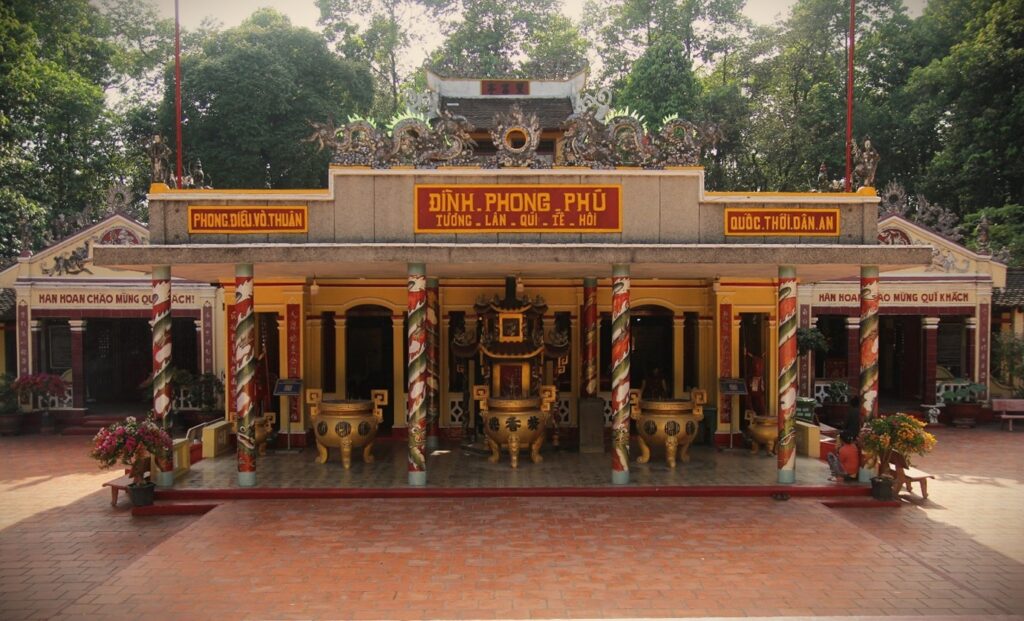

Belief is people’s faith and reverence toward supernatural forces, also known as “the sacred,” in contrast to the observable secular world. This belief changes depending on the socio-economic conditions of each nation and locality. Forms of worship such as the Tutelary God (Thành Hoàng), the Mother Goddess (Mẫu), and the Agricultural Deity (Thần Nông) all express humanity’s shared belief in the sacred and carry historical significance. In Vietnamese folk belief, the worship of the Tutelary God plays a key role in the spiritual life of the community.
Main Communal House of Phong Phu Communal House – Ho Chi Minh City, photograph taken in 2026
Along with belief comes the festival—an essential community cultural activity consisting of two main parts: the ritual and the festivities, closely connected to the spiritual life of the people. The ritual part shows people’s respect for deities, while also reflecting their hopes and aspirations for a good life. The festive part includes the community’s cultural, religious, and artistic activities, meeting the needs for recreation, social interaction, and community bonding. Festivals are precious cultural heritage, contributing to the education of good traditions, honoring the merits of ancestors and historical figures, and preserving national cultural identity.
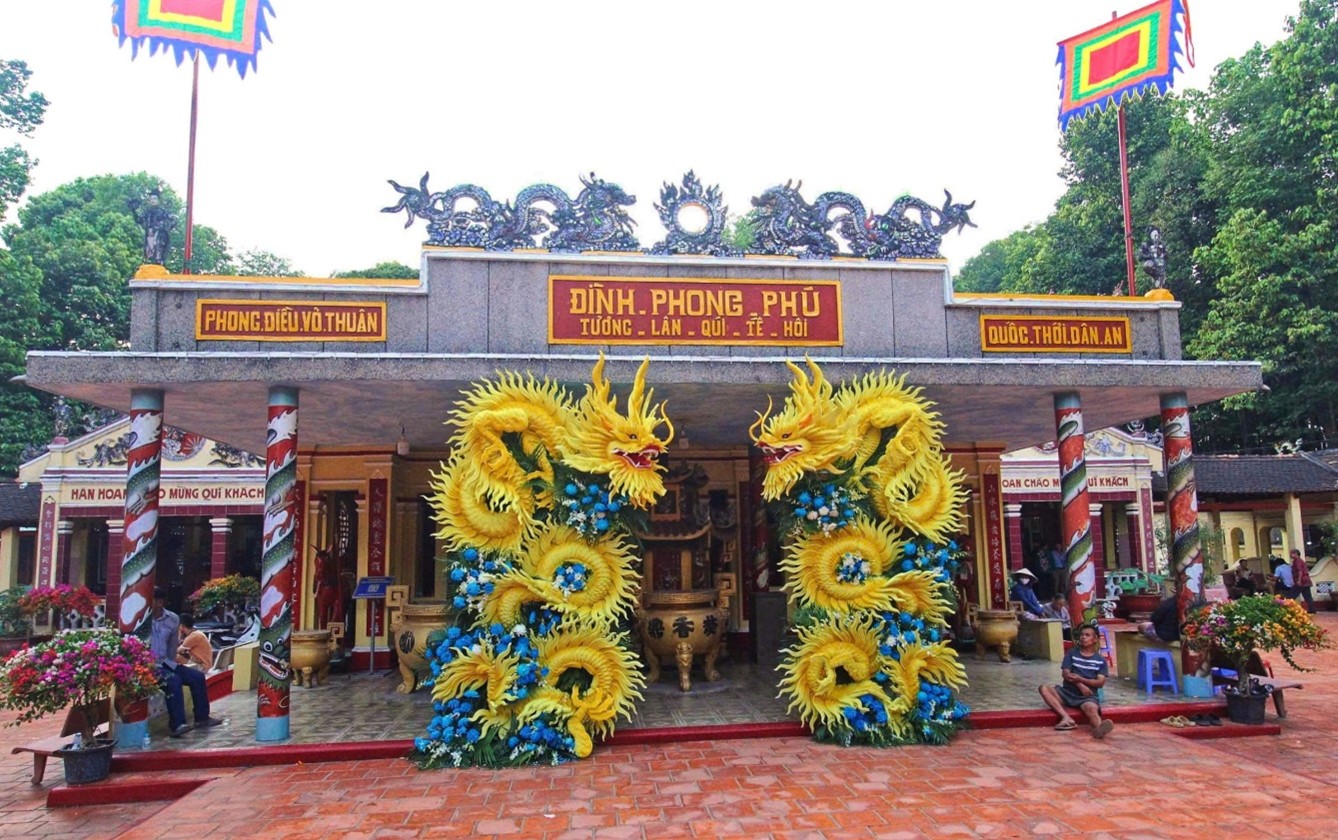
Main Communal House of Phong Phu Communal House – Ho Chi Minh City, photograph taken in 2026
The most prominent festival is the Ky Yen Festival—a solemn ceremony dedicated to the village Tutelary God—held annually for three days on the 14th, 15th, and 16th of the 11th lunar month at the national historical–cultural relic Phong Phu Communal House (Thu Duc City). It is combined with hat boi (classical Vietnamese opera). Performances with vibrant colors, elaborate costumes, and an atmosphere that is solemn yet lively have created a distinctive identity for Phong Phu Communal House, attracting the participation of many local residents.
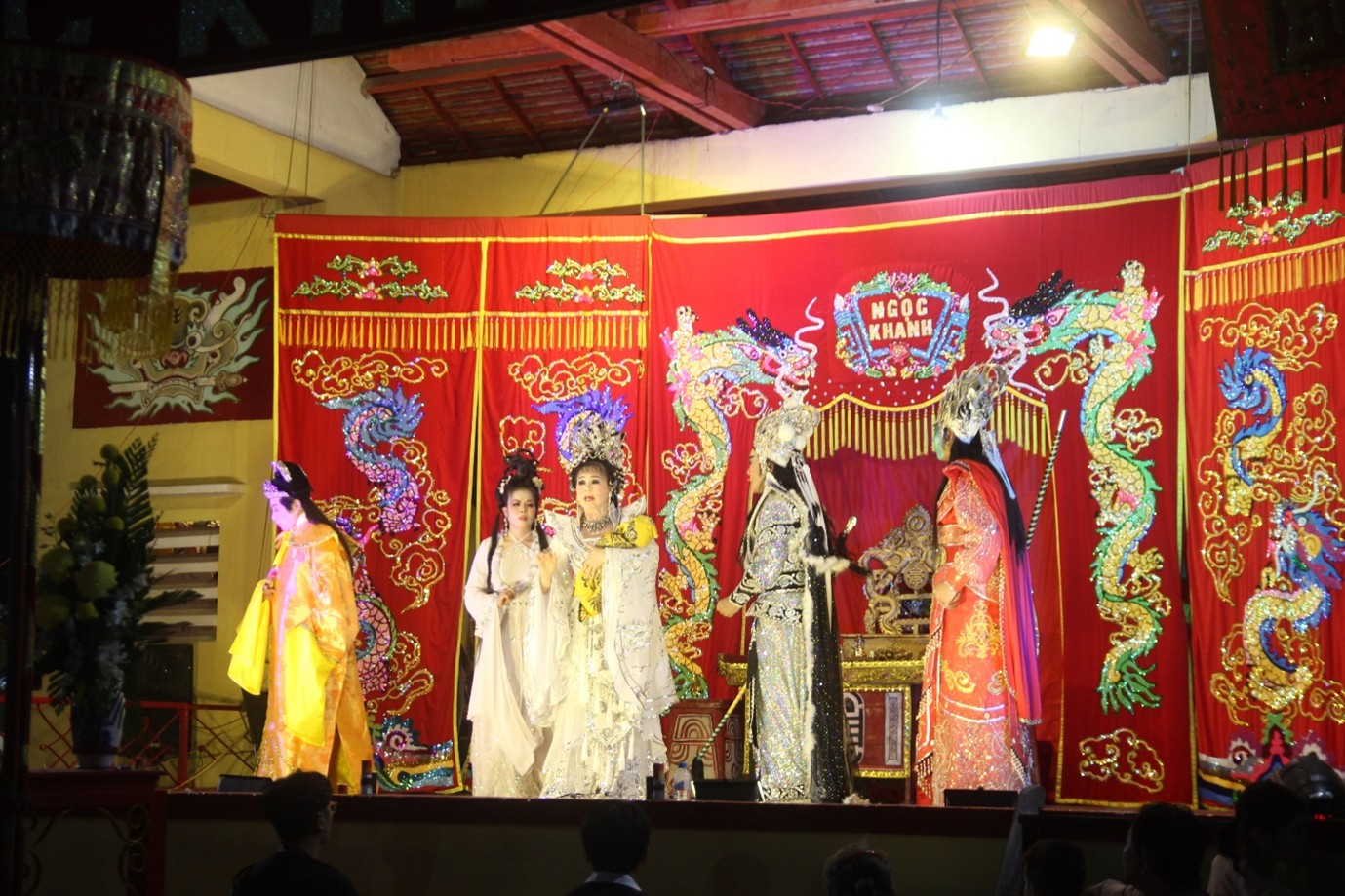
Hat boi performance at Phong Phu Communal House – Ho Chi Minh City, photograph taken in 2026
Through festivals and cultural activities, Phong Phu Communal House has contributed to the preservation and dissemination of folk art values while carrying profound educational significance. Activities held at the communal house help younger generations better understand the tradition of “remembering the source of one’s water,” expressing gratitude to ancestors who contributed to nation-building and defense. As a result, the communal house becomes a vivid space for historical and cultural education, fostering knowledge and nurturing respect for heritage among today’s students.
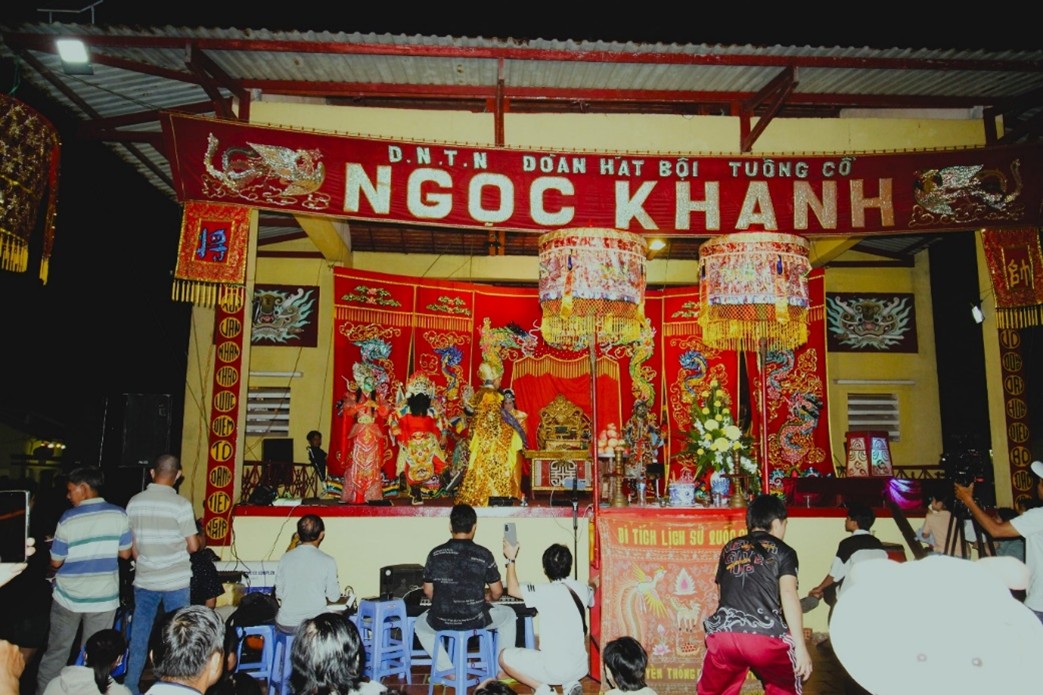
Hat boi performance at Phong Phu Communal House – Ho Chi Minh City, photograph taken in 2026
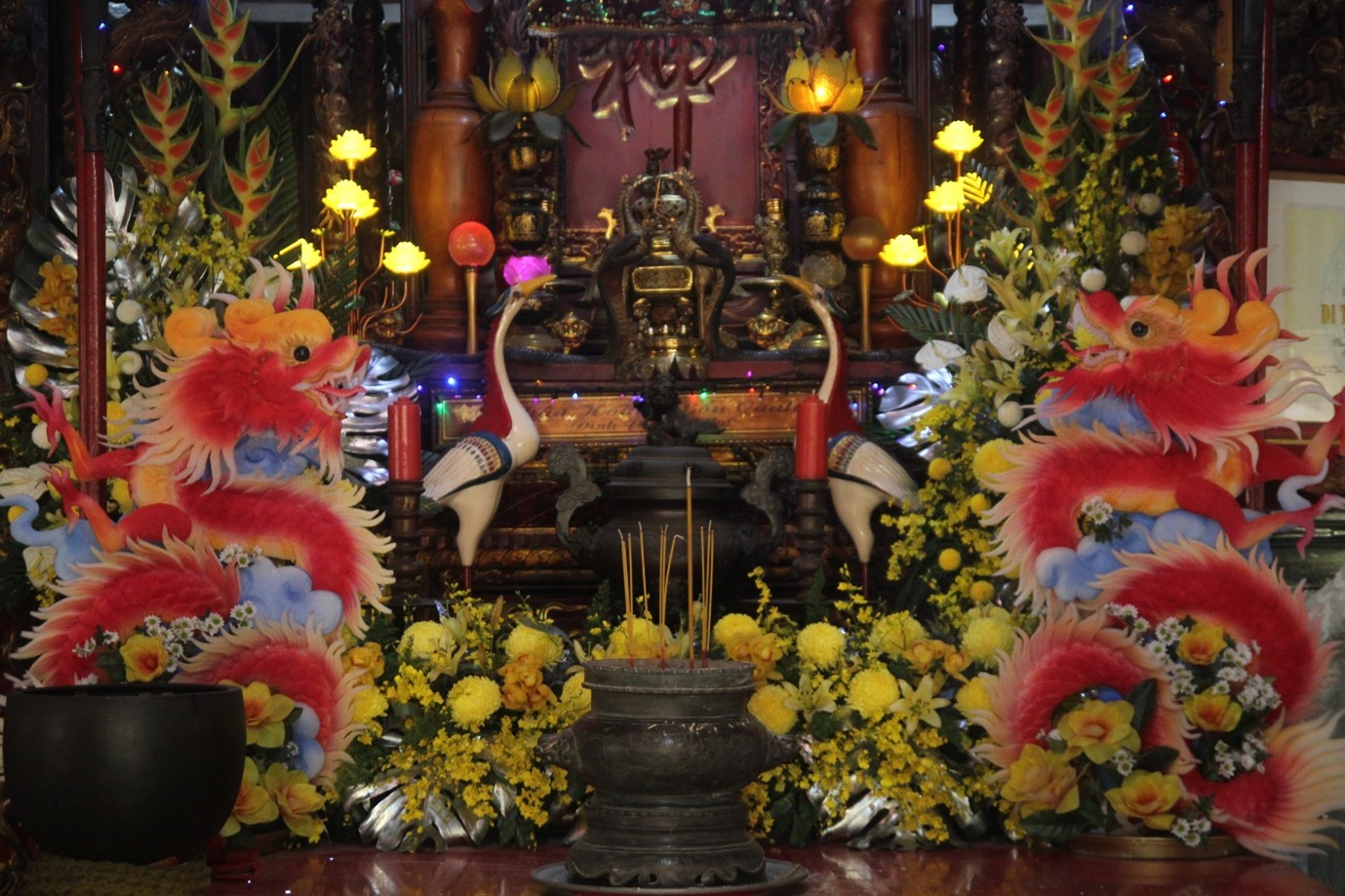
At present, Phong Phu Communal House remains well preserved and continues to be actively used for community cultural and belief-related activities. The space is solemnly decorated, and stages and facilities for festivals are carefully prepared, demonstrating that the site still plays an important role in local cultural life.
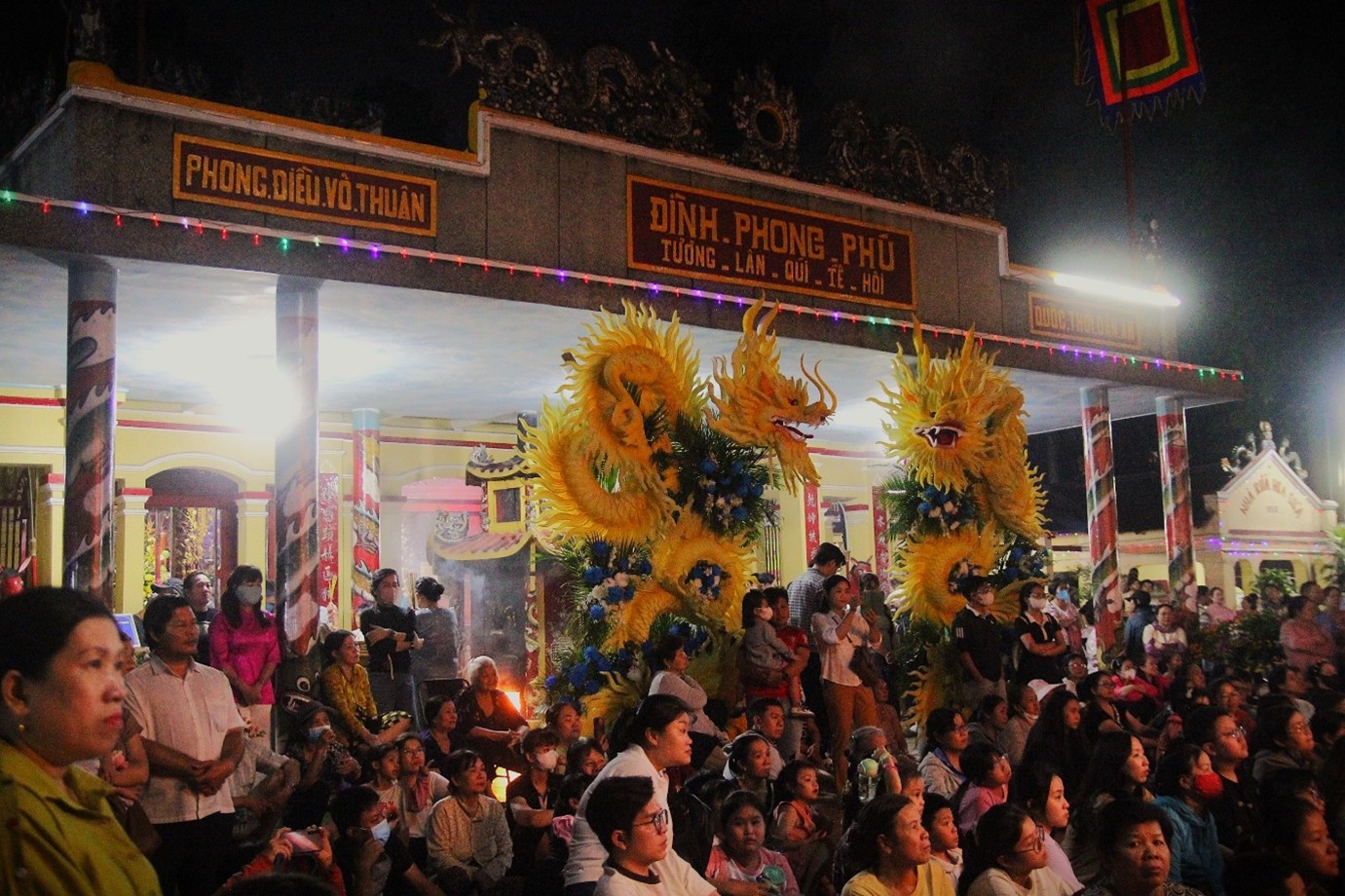
Local residents watching a hat boi performance at Phong Phu Communal House – Ho Chi Minh City, photograph taken in 2026
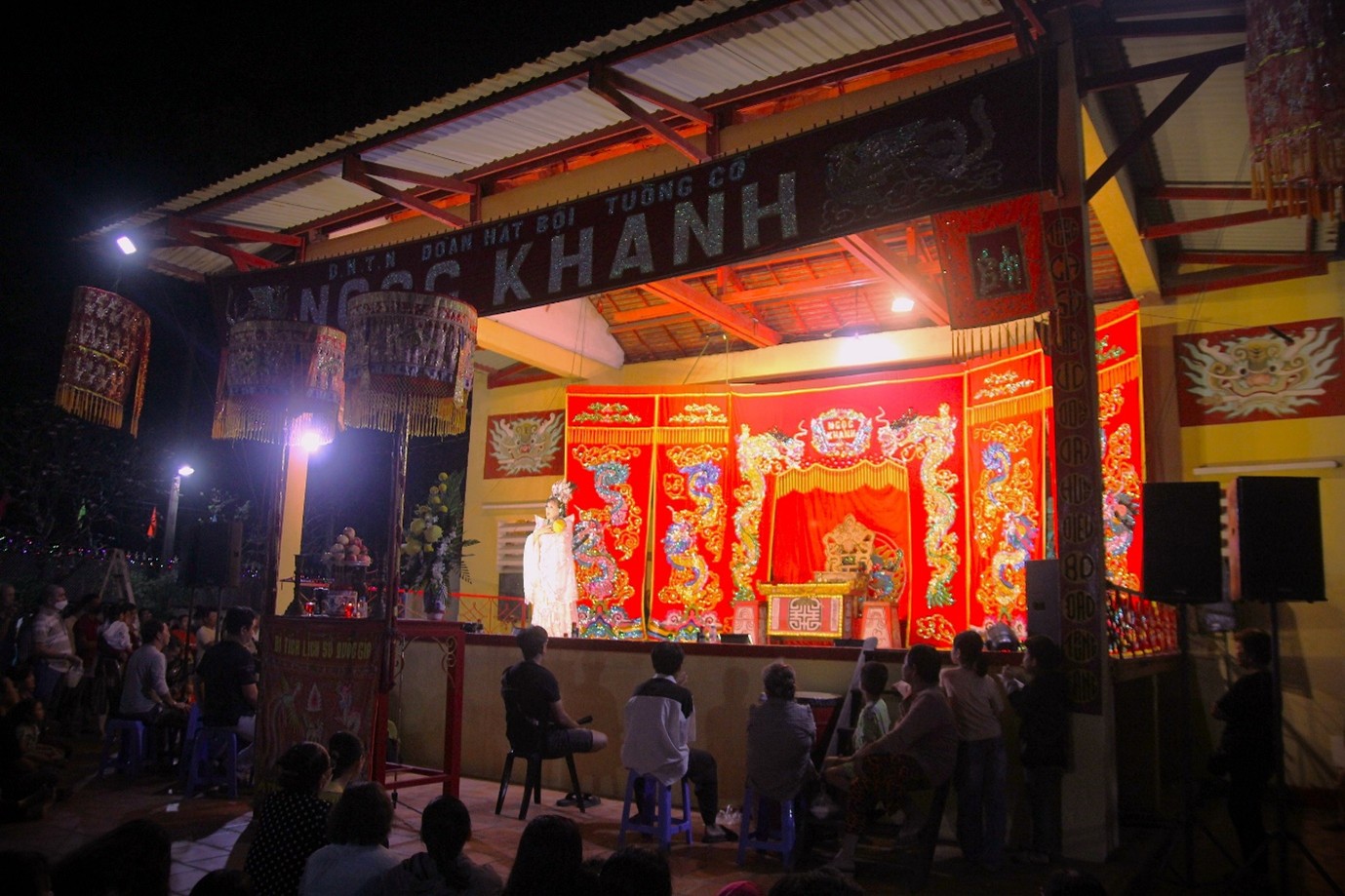
Local residents watching a hat boi performance at Phong Phu Communal House – Ho Chi Minh City, photograph taken in 2026
These images clearly reflect efforts to revive traditional cultural activities, especially the organization of classical opera performances within the communal house grounds. Such activities help recreate the atmosphere of past festivals while ensuring that folk art forms continue to be maintained and promoted in contemporary life.
Notably, the active participation of people of various age groups highlights the communal house’s role in strengthening community bonds. Residents not only attend festivals but also actively watch, support, and preserve traditional activities, demonstrating their awareness and collective effort to safeguard the cultural values of Phong Phu Communal House.
The communal house thus shines not only as a historical monument but also as a living cultural space where traditional arts quietly flow through generations. Lively festivals and community gatherings illuminate the value of “remembering one’s roots,” reminding today’s generation to cherish the past, preserve cultural identity, and continue the nation’s cultural legacy within the context of modern technological life.